The development of automotive electronics technology has been a continuous evolutionary process, progressing from simple to complex, from single-function to highly integrated, and from driver assistance to intelligent systems.
The nascent stage and the digitization of basic functions (1930s-late 1970s): Automotive electronics technology began to emerge. In the 1930s, the car radio became the first in-car entertainment device, marking the birth of the prototype of "in-car electronics." In the early 1950s, the first electronic device appeared in a car-a vacuum tube radio. In the mid-1960s, transistor voltage regulators and ignition systems began to be equipped in automobiles. Integrated circuits and microprocessors below 16 bits were widely used in automobiles, realizing the digitization of basic functions such as alternators and voltage regulators, ignition systems, and instrument panels, replacing some mechanical or vacuum devices.
The rapid development and electronic control of key systems (1980s-late 1990s): Microprocessors were widely used, and core powertrains and chassis systems were the first to achieve electronic control. Representative technologies and applications include engine electronic control units (ECUs), automatic transmission control units (ATUs), anti-lock braking systems (ABS), airbags, and electric power steering. In 1986, Bosch developed the Controller Area Network (CAN) bus protocol, which was first applied to the Mercedes-Benz S-Class in 1991, enabling high-speed data sharing between ECUs and marking the emergence of the rudimentary form of in-vehicle networks.
During the period of integrated control, networking, and safety and comfort expansion (late 1990s-early 2010s), in-vehicle network technology became standardized and widespread, and the ability for collaborative control between systems was enhanced. The CAN bus became the mainstream in-vehicle network standard, while buses such as LIN, FlexRay, and MOST were used in specific areas. Advanced driver assistance systems began to emerge and develop rapidly, such as electronic stability programs, adaptive cruise control, automatic emergency braking, and tire pressure monitoring systems. Infotainment systems evolved from radios/CD players to multimedia systems with color screens, integrated navigation, Bluetooth connectivity, and reversing cameras.
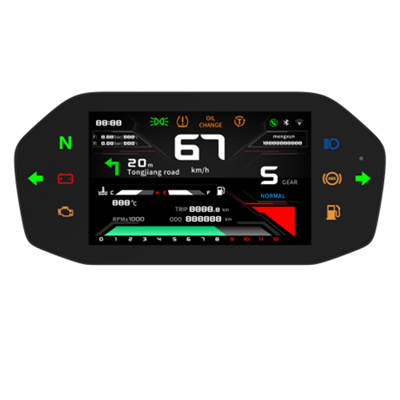
In the early 2010s-present stage of intelligentization, connectivity, and domain-centralized architecture, intelligentization and connectivity became the core driving forces, and the electronic and electrical architecture began to evolve from distributed to domain-centralized. Advanced driver assistance systems (ADAS) became widely adopted and continuously upgraded, sensor fusion technology matured, and Level 2 partial autonomous driving became mainstream. Vehicle-to-everything (V2X) technology developed, with in-vehicle communication units achieving 4G/5G mobile internet connectivity, supporting communication between vehicles, between vehicles and infrastructure, and between vehicles and the cloud. The intelligent cockpit revolution emerged, with large touchscreens, full LCD instrument panels, voice recognition interaction, facial recognition, and gesture control becoming trends. To address the complexity challenges brought by the surge in the number of ECUs, automotive electronic and electrical architecture evolved towards a domain controller architecture integrated by functional domain, and further developed towards a central computing platform.
High-speed in-vehicle Ethernet began to replace the CAN bus as the backbone network. Software-defined vehicles became a core trend, with service-oriented architecture and over-the-air (OTA) upgrade technology enabling flexible deployment and remote iteration of software functions. The rapid development of new energy vehicles also promoted progress in areas highly dependent on electronic technology, such as the "three-electric" systems (battery, motor, and electronic control). Currently, in-vehicle optical communication solutions, central computing units, and area controllers have become core solutions in the era of "AI-defined vehicles."
Automotive electronics technology will continue to develop towards higher levels of autonomous driving, centralized electronic and electrical architectures, vehicle-cloud collaboration and big data applications, deep V2X integration, widespread adoption of SOA software architecture, deep penetration of artificial intelligence, and enhanced information security and functional safety.