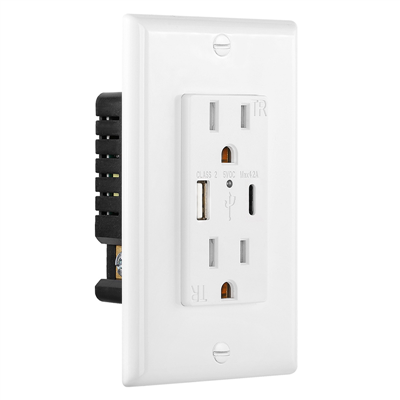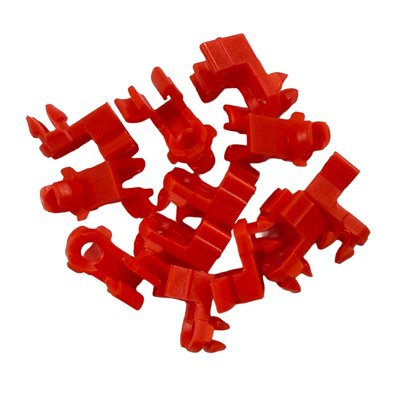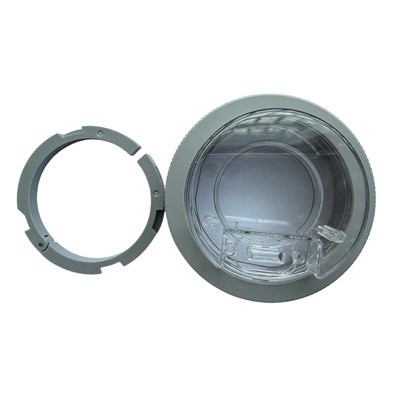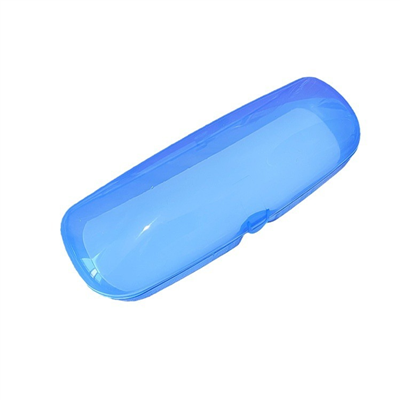

Hey there! I'm a supplier of injection molded parts, and I've been in this game for quite a while. Injection molding is a super popular manufacturing process, and it's used to make all sorts of stuff, from Plastic Control Knob to PVC Push Button, Plastic Loop Clamps, Plastic Socket Panel, and Perspex Pen Holder.
One of the things that makes injection molding so versatile is the use of additives. Additives are substances that are added to the base plastic material to enhance its properties or give it new characteristics. Let's take a look at some of the common additives used in injection molded parts.
Plasticizers
Plasticizers are probably one of the most well - known additives. They're used to make plastics more flexible and easier to process. When you add a plasticizer to a rigid plastic, it reduces the intermolecular forces between the polymer chains. This makes the plastic softer, more pliable, and more resistant to cracking.
For example, in the production of PVC Push Button, plasticizers are often added to PVC. Without plasticizers, PVC would be too hard and brittle to use as a push - button. The plasticizer allows the PVC to be molded into the right shape and gives it the flexibility needed for repeated use.
However, there are some concerns with plasticizers. Some types, like phthalates, have been linked to health and environmental issues. So, there's a growing trend towards using more eco - friendly plasticizers in injection molding.
Stabilizers
Stabilizers are used to prevent the degradation of plastics during processing and use. Plastics can be affected by heat, light, and oxygen, which can cause them to break down over time. Stabilizers help to counteract these effects.
Heat stabilizers are crucial in injection molding because the plastic is heated to a high temperature during the process. If there were no heat stabilizers, the plastic could start to decompose, leading to poor - quality parts. For instance, in the production of Plastic Socket Panel, heat stabilizers ensure that the plastic maintains its integrity during the high - temperature molding process and also during its long - term use in electrical applications.
UV stabilizers are used when the injection - molded parts will be exposed to sunlight. They protect the plastic from the harmful effects of ultraviolet radiation, which can cause discoloration, embrittlement, and a loss of mechanical properties.

Colorants
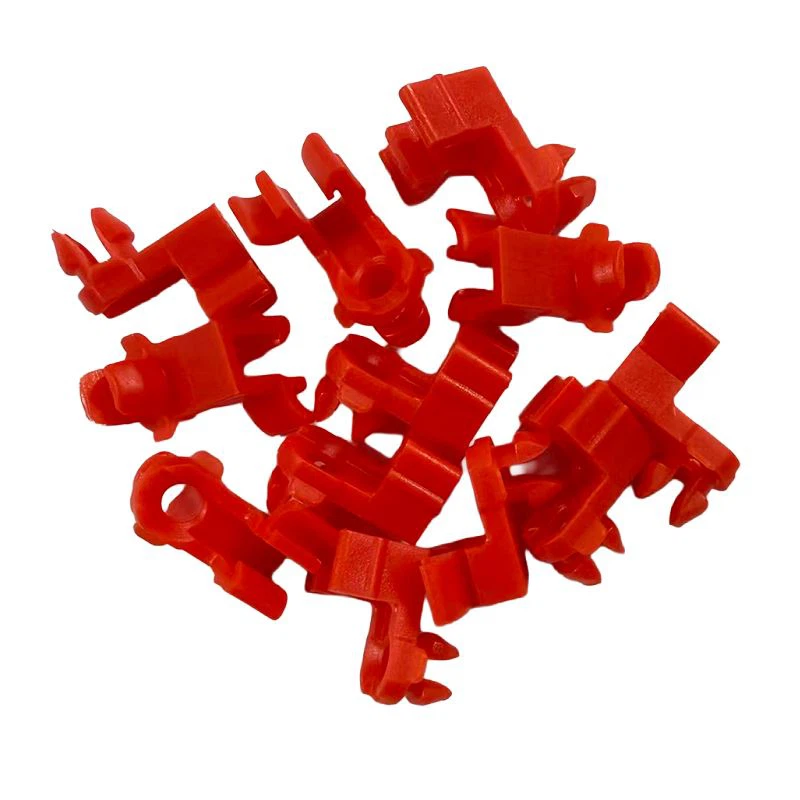
Colorants are used to give injection - molded parts their desired color. There are two main types of colorants: pigments and dyes.
Pigments are insoluble particles that are dispersed in the plastic. They provide good color fastness and are suitable for a wide range of plastics. Pigments can be inorganic or organic. Inorganic pigments, like titanium dioxide, are often used for white coloration. They're very stable and can withstand high temperatures during molding.
Dyes, on the other hand, are soluble in the plastic. They can provide more intense and transparent colors. However, they may not be as stable as pigments, especially when exposed to heat, light, or chemicals.
When making Perspex Pen Holder, colorants are used to create a variety of attractive colors. Whether it's a bright, eye - catching color or a more subdued, elegant tone, colorants play a key role in the aesthetic appeal of the product.
Reinforcements
Reinforcements are added to plastics to improve their mechanical properties, such as strength, stiffness, and impact resistance. One of the most common reinforcements is glass fiber.
Glass fiber - reinforced plastics are widely used in injection molding. The glass fibers act as a sort of skeleton within the plastic matrix, providing additional strength. For example, in the production of Plastic Loop Clamps, glass fiber reinforcement can make the clamps stronger and more durable, allowing them to hold objects firmly in place.
Carbon fiber is another type of reinforcement. It's even stronger and lighter than glass fiber, but it's also more expensive. Carbon fiber - reinforced plastics are often used in high - performance applications where weight reduction and high strength are critical.
Lubricants
Lubricants are used to reduce friction between the plastic and the mold during the injection molding process. This helps the plastic to flow more easily into the mold cavity and makes it easier to eject the part from the mold after it has cooled.
There are two main types of lubricants: internal and external. Internal lubricants are mixed with the plastic resin before molding. They reduce the internal friction within the plastic, making it more fluid. External lubricants are applied to the surface of the mold. They create a slippery layer between the mold and the plastic, preventing the plastic from sticking to the mold.
In the production of Plastic Control Knob, lubricants are essential. They ensure that the knob can be molded smoothly and that it can be removed from the mold without any damage.
Flame Retardants
Flame retardants are added to plastics to make them less flammable. In many applications, especially in the electrical and automotive industries, it's crucial that the injection - molded parts have good fire - resistance properties.
Flame retardants work by either suppressing the ignition of the plastic or by reducing the rate of burning. There are different types of flame retardants, such as halogen - based and halogen - free. Halogen - based flame retardants have been used for a long time, but there are concerns about their environmental impact and potential health risks. So, there's a growing demand for halogen - free flame retardants.
For example, in the production of Plastic Socket Panel, flame retardants are added to ensure that the panel doesn't catch fire easily in case of an electrical short - circuit.
Antioxidants
Antioxidants are used to prevent the oxidation of plastics. Oxidation can cause the plastic to become brittle, discolored, and lose its mechanical properties over time.
When plastics are exposed to oxygen, especially at high temperatures during the injection molding process, oxidation can occur. Antioxidants react with the oxygen before it can react with the plastic, thus protecting the plastic from oxidation.
In the production of various injection - molded parts, including those mentioned above, antioxidants help to extend the lifespan of the parts and maintain their quality over time.
Conclusion
As you can see, additives play a crucial role in the injection molding process. They allow us to create parts with a wide range of properties, from flexibility and strength to color and fire - resistance. Whether you're looking for Plastic Control Knob, PVC Push Button, Plastic Loop Clamps, Plastic Socket Panel, or Perspex Pen Holder, the right combination of additives can make all the difference.
If you're in the market for high - quality injection molded parts, don't hesitate to get in touch with us. We have the expertise and experience to provide you with the best solutions for your needs. Let's start a conversation and see how we can work together to meet your injection molding requirements.
References
- "Injection Molding Handbook" by O. Olsson and T. S. Thomsen
- "Plastics Additives: An A - Z Reference" by Geoffrey Pritchard